
Push-to-Talk Over Cellular: The Complete Guide to PoC Radios and Nationwide Systems

What Is Push-to-Talk over Cellular?
Push-to-Talk over Cellular, commonly called PoC, is a wide-area push-to-talk communication system that uses 4G/LTE and 5G cellular networks, and Wi-Fi instead of traditional radio repeaters and FCC-licensed UHF or VHF frequencies. A PoC radio, mobile radio, or smart device connects to a cloud-based PoC server, allowing users to make instant group calls, individual calls, emergency calls, texts, image sharing, video calls, and GPS-tracked dispatch communications across a facility, city, region, or nationwide coverage area.
Nextel and the History of PoC
Nextel laid the foundation for modern PoC innovation and acceptance.
Prior to PoC, business communication was dominated by two-way radios on peer-to-peer and local radio networks. The concept of Push-to-Talk over Cellular was introduced by Nextel in 1987, as an alternative to two-way radios. Nextel revolutionized business communication when it started to pass small voice packets from radios across their iDEN network.
Nextel's iDEN network offered a unique push-to-talk "walkie-talkie" feature, in addition to direct-dialed voice calls. At its peak, in 2005 Nextel had over twenty million subscribers in the United States.
Nextel was acquired by Sprint, but in 2013 Sprint decommissioned the Nextel iDEN network because it could not support modern LTE data and bandwidth requirements. But
How PoC Works
How Does Push-to-Talk Over Cellular Work?
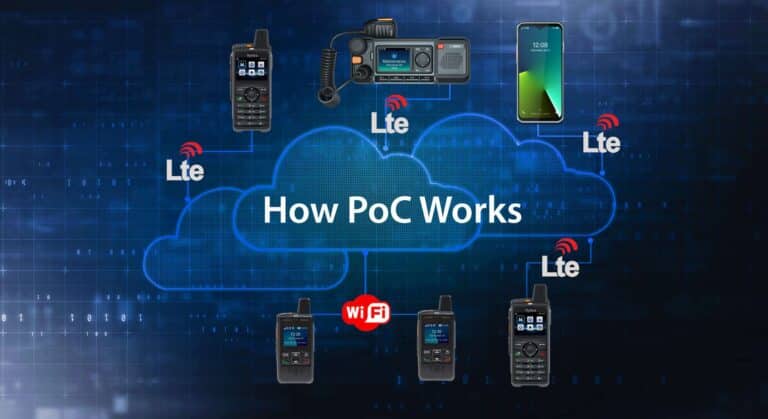
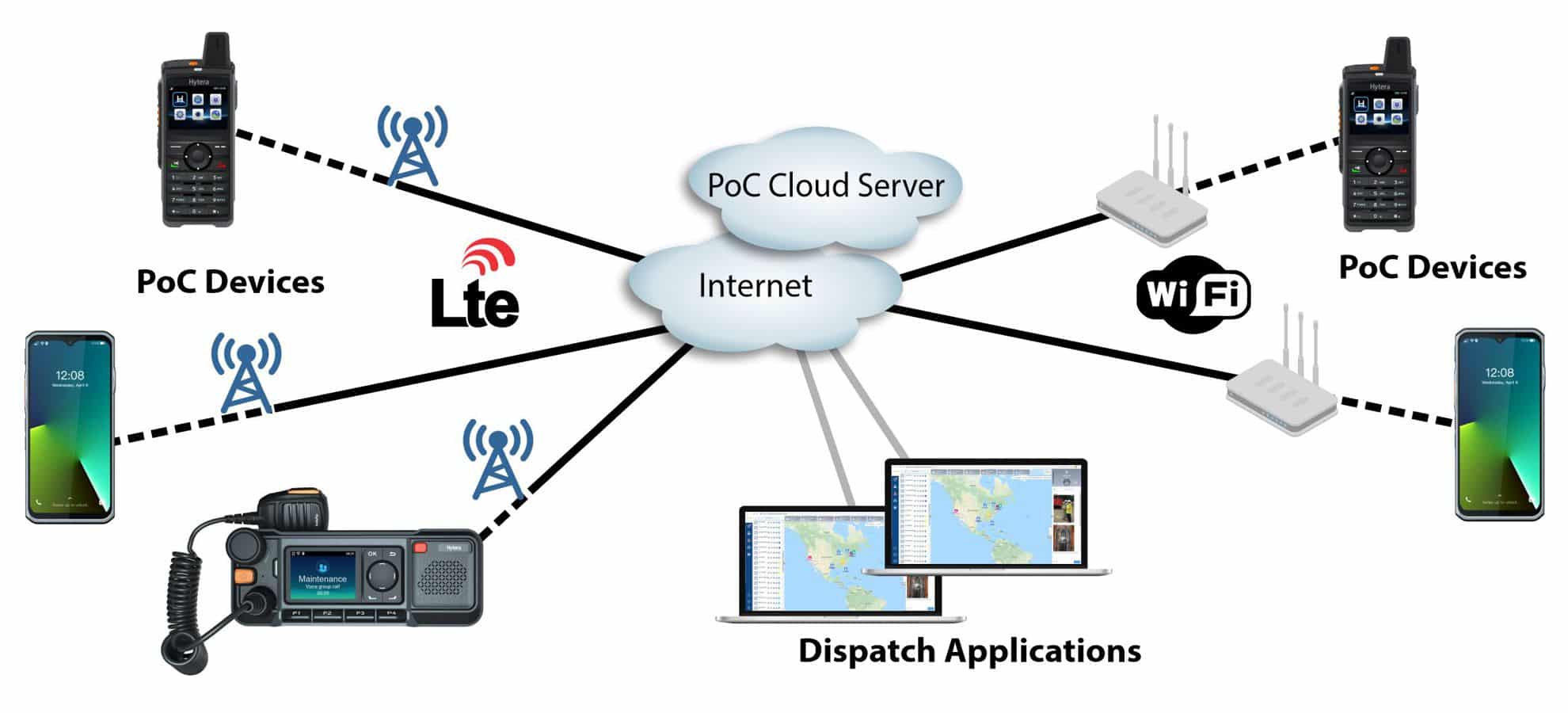
PoC enables nationwide coverage by connecting radios and smart devices to a cloud-based server over 4G/LTE or 5G cellular networks or by using a facility’s Wi-Fi network. The server manages users, talk groups, permissions, dispatch access, and call routing. When a user presses the push-to-talk button, voice is transmitted to the selected individual, group, dispatcher, or cross-enterprise talk group.
PoC is often described as Radio over IP (RoIP) because it delivers radio-style communications across IP networks. Similar to Voice over IP, it uses internet connectivity, but it is optimized for instant group communications, dispatching, emergency alerts, and workforce coordination.
How Do PoC Radios Connect to Mobile Operators?
PoC radios connect to mobile operator networks using data SIM cards (similar to the way smartphones connect to operator networks). The SIM card allows the device to access 4G/LTE or 5G cellular data networks. Once connected, the radio sends voice and data traffic to the PoC server through the internet.
This is similar to the way a smartphone connects to a carrier network, but the PoC device is optimized for push-to-talk communication rather than general consumer use. The device may also include Wi-Fi, allowing the user to connect through a facility network when available.
What Happens When Someone Presses the PTT Button?
When a user presses the PTT button, the device sends voice data through the cellular or Wi-Fi network to the PoC server. The server identifies the intended recipient or talk group and instantly routes the audio to the appropriate radios, mobile devices, or dispatch consoles.
A PoC system can support:
- One-to-one individual calls
- One-to-many group calls
- Emergency calls
- All-call announcements
- Dynamic dispatch-selected groups
- Location-based groups
- Cross-enterprise groups
- Voice, text, image, and video communications, depending on the platform and device
Does PoC Require Radio Towers or Repeaters?
No. PoC does not require traditional LMR infrastructure. Coverage comes from cellular networks and Wi-Fi. Users can communicate across buildings, campuses, cities, and regions without installing repeaters, towers, or licensed radio systems.
PoC Cloud Servers
What is a PoC Cloud Server?
A PoC server is the system component that manages the PoC network. It may be called a server, controller, network appliance, or cloud platform. Its job is to connect PoC devices, manage call routing, authenticate users, control talk groups, support dispatch applications, and maintain system configuration. The resilience of the PoC servers is an important factor in the reliability of the overall PoC service, so it is one of the key considerations in choosing the best PoC service provider.
What Does a Cloud PoC Server Do?
A cloud PoC server provides centralized access for radios, mobile radios, smart devices, dispatch consoles, and system administrators. Devices reach the cloud server through cellular data or Wi-Fi internet connectivity. The service provider manages the server infrastructure, redundancy, platform availability, and updates.
PoC Subscription Service
What Is a PoC Subscription Service?
A PoC subscription service provides access to the PoC platform, cloud server, mobile network data service, and often, dispatching features through a monthly or annual plan. Customers typically purchase the PoC devices and pay for the service plan that connects those devices to the network.
Subscription-based PoC is one of the fastest ways to deploy nationwide push-to-talk because it shifts the system model from infrastructure ownership to service access.
What Does a PoC Subscription Usually Include?
A PoC subscription may include:
- Access to the PoC cloud platform
- SIM card and mobile data access
- Individual and group calling
- Emergency call support
- Text, image, or video support, depending on device
- Dispatch access, if licensed
- System updates and platform maintenance
- Support from the provider or dealer
Exact inclusions vary by platform, device, service provider, and plan.
What Are the Cost Advantages of PoC Subscriptions?
PoC subscriptions reduce up-front infrastructure costs. Instead of purchasing and installing repeaters, antennas, towers, dispatch servers, and site equipment, an organization can deploy devices and subscribe to the platform. This OPEX model is attractive for small and mid-sized businesses, fast-growing organizations, temporary operations, and large companies that want predictable per-user costs.
Different PoC Devices
What types of PoC devices are available?
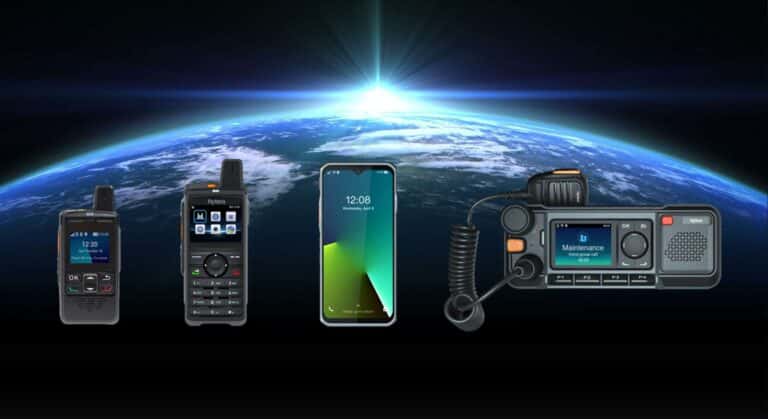
PoC devices generally fall into three categories: handheld PoC radios, mobile PoC radios, and PoC smart devices or mobile computers. Each form factor supports a different operating role. It is important to select the best PoC radios with excellent audio quality, durability, and long battery life.
What is a Handheld PoC Radio?
A handheld PoC radio is a rugged push-to-talk device designed for workers who need simple, fast, and reliable voice communication. They typically feature a physical PTT button, speaker, microphone, battery, display, GPS, emergency button, and Wi-Fi or cellular connectivity. Some models include cameras, keypads, text messaging, and car kit support.
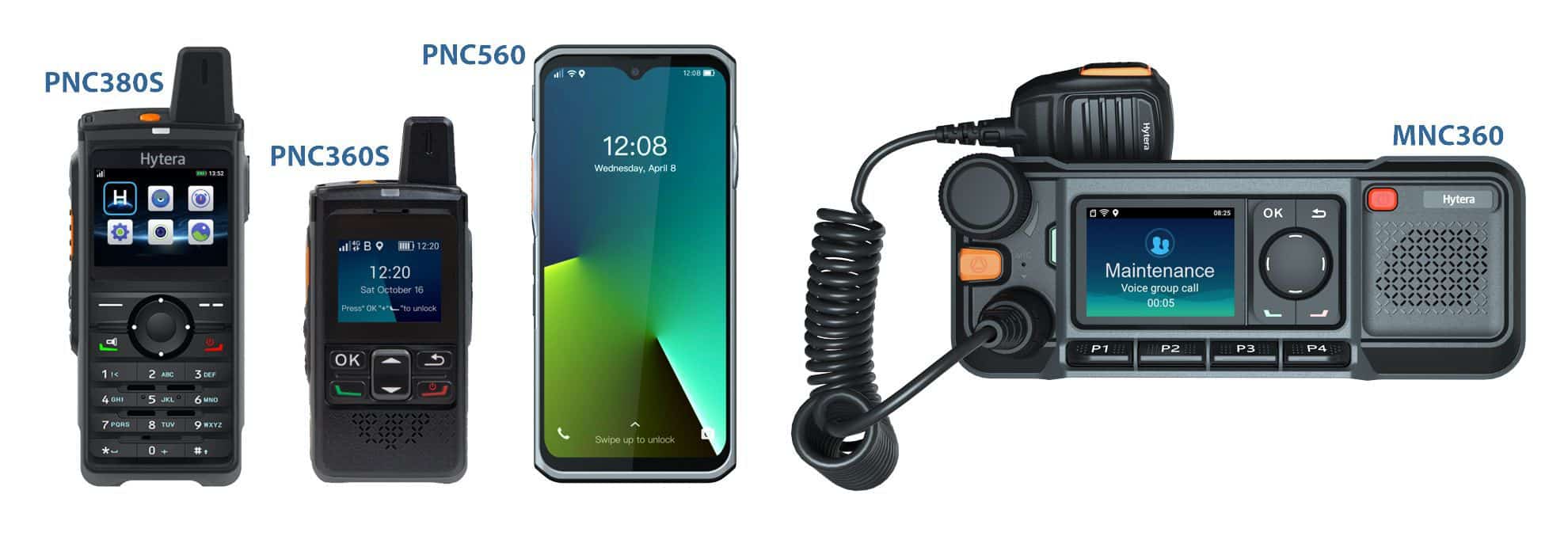
Hytera handheld PoC options include compact devices such as the PNC360S and feature-rich radios such as the PNC380S. These devices are designed for wide-area group calling, dispatch support, rugged operation, and business environments where a consumer smartphone is not the best tool.
What is a PoC Mobile Radio?
A PoC mobile radio is installed in a vehicle and designed for driver communication. The MNC360 is an example of a PoC mobile radio that supports push-to-talk communication, instant group calling, GPS location tracking, dispatch integration, loud audio, and features tactile controls. Mobile PoC radios are useful for fleets because drivers can communicate without handling a smartphone or tablet.
What is a PoC smart device or mobile computer?
A PoC smart device combines push-to-talk communication with Android business applications. Devices such as the PNC560 and PNC560S can support mobile computing, business apps, barcode scanning, cameras, GPS, and push-to-talk communications. These devices are useful for roles that require both communication and workflow applications, such as warehouse operations, healthcare, inventory management, inspections, security checkpoints, and field service.
PoC Market Growth
Is the Push-to-Talk Over Cellular Market Growing?
Yes. Push-to-Talk over Cellular is growing because organizations need instant workforce communication across larger service areas, more mobile teams, and more distributed facilities. The market is being driven by the adoption of LTE and 5G networks, the expansion of connected mobile workforces, the need for cloud-based communication platforms, and the shift from infrastructure-heavy radio systems to subscription-based services.
Analyst projections vary because some reports measure PoC specifically, while others include the broader Push-to-Talk market across LMR, cellular, software, hardware, services, and dispatch applications. Even with those differences, the trend is consistent: business demand for instant group communication over broadband networks continues to expand.
Is the Demand for PoC Growing?
Recent market research estimates show meaningful growth across the PoC and broader PTT categories:
Global Market Insights – According to GMI, between 2023 and 2032, the push-to-talk over cellular market will grow at a 10.5% Compound Annual Growth Rate (CAGR), with the greatest growth taking part in the Commercial sector.
Allied Market Research – The push-to-talk over cellular market size was valued at $3.43 billion in 2019, and is projected to reach $6.95 billion by 2027, growing at a Compound Annual Growth Rate (CAGR) of 9.4% from 2020 to 2027.
Persistence Market Research – The market revenue for push-to-talk over cellular totaled $3.54 billion in 2025, and is expected to reach $6.99 billion by 2032, increasing at a CAGR of 9.7%.
Why are Businesses Adopting PoC Now?
Businesses adopt PoC because it reduces the barriers associated with traditional wide-area radio systems. A company that needs to communicate across multiple cities, routes, campuses, warehouses, construction sites, or customer locations may not want to purchase towers, repeaters, base stations, combiners, dispatch servers, and FCC frequency licenses. PoC gives them a scalable way to deploy business-grade push-to-talk communications using existing cellular and Wi-Fi networks.
The practical growth drivers are clear:
- More distributed workforces
- More delivery and service fleets
- More security and facility teams working across multiple locations
- More demand for GPS tracking and dispatch visibility
- More need for lower up-front system cost
- More interest in video, images, texts, and multimedia communication
- More businesses looking for a Nextel-style group calling experience with modern devices
Who are the Users of Push-to-Talk over Cellular?
Who should use Push-to-Talk over Cellular?
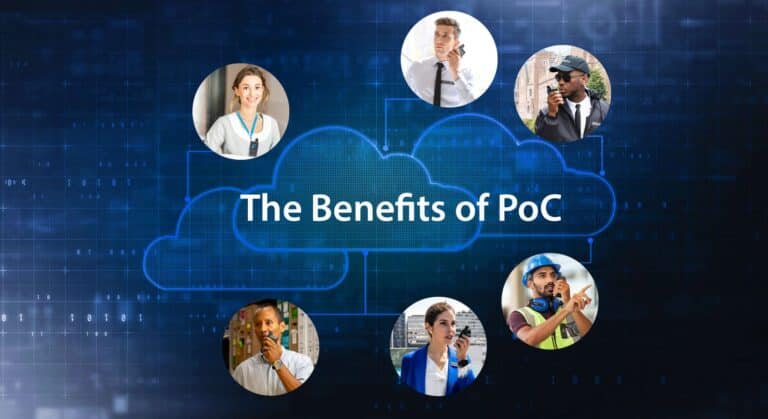
PoC is used by organizations that need instant communication across wide areas without building a private radio network. It is particularly useful for teams with mobile workers, fleet vehicles, multiple locations, temporary job sites, or a need for GPS-based dispatch visibility.
Which industries use PoC radios and systems?
PoC is a strong fit for:
- Security companies and mobile patrols
- Schools, universities, and school districts
- Hospitals and healthcare campuses
- Hotels, resorts, and hospitality groups
- Manufacturing plants and industrial facilities
- Warehouses and logistics operations
- Transportation fleets
- Waste management companies
- Construction companies
- Agriculture operations
- Convention centers and entertainment venues
- Theme parks and large public venues
- Facility management teams
- Maintenance and custodial departments
- Utilities and field service organizations
Why Do Security Teams Use PoC?
Security teams often need a mix of wide-area coverage, emergency alerts, location tracking, and reliable one-button communication. A security supervisor may need to reach guards across a campus, mobile patrols across a city, and dispatch staff from a central operations center. PoC gives security operations flexible group calling and GPS-enabled coordination without requiring every client site to share the same local radio infrastructure.
Why Do Fleets Use PoC?
Fleets use PoC because drivers move beyond the range of local radio systems. A PoC mobile radio can provide push-to-talk communication, GPS tracking, dispatcher visibility, emergency alerts, and route coordination across a wide operating area. This is useful for delivery fleets, shuttle operations, transportation providers, waste hauling, construction vehicles, service trucks, and mobile maintenance teams.
Why Do Schools and Campuses Use PoC?
Schools and campuses use PoC when they need communication across multiple buildings, bus routes, district offices, maintenance teams, and security personnel. A district may use Wi-Fi on campus and cellular coverage for buses, athletics, field trips, maintenance vehicles, or remote staff. PoC can support district-wide emergency communication without building a district-wide radio network.
PoC Features and Benefits
What are the Main Benefits of Push-to-Talk over Cellular?
The main benefits of PoC are wide-area coverage, fast deployment, low infrastructure cost, flexible talk groups, centralized dispatching, device GPS, multimedia communication, and scalability. PoC gives organizations the familiar push-to-talk workflow of two-way radios while using existing broadband networks.
What Coverage Benefits Does PoC provide?
PoC can provide single-site, multi-site, regional, and nationwide communications. A user at a warehouse can talk to a delivery driver, a supervisor at another location, or a dispatcher working remotely. Coverage depends on Wi-Fi quality and mobile operator availability, but PoC removes the fixed range limitation of local radio repeaters.
Does PoC Require FCC Licenses?
PoC does not require the customer to obtain FCC radio frequency licenses for traditional UHF or VHF radio channels because it uses cellular and Wi-Fi networks. This is one of the biggest deployment advantages for businesses in dense urban areas where spectrum can be difficult to obtain or where a wide-area DMR system would require significant infrastructure planning.
How Quickly Can PoC Be Deployed?
PoC can often be deployed quickly because devices can be preconfigured with users, groups, emergency settings, dispatch permissions, and SIM cards. A business can roll out devices without installing repeaters, towers, antennas, or base station equipment. For organizations with seasonal events, temporary job sites, new facilities, or fast-growing teams, this is a major advantage.
What Communication Features Can PoC support?
Depending on the platform and device, PoC can support:
- Instant group calling
- Individual calling
- Emergency calling
- Text messaging
- Image sharing
- Video calling or video sharing
- GPS location tracking
- Geofencing
- Bluetooth beacon indoor location tracking
- Dispatch console calling
- Dynamic call group creation
- Call recording and logs
- Reports and event history
- Remote stun and revive
- Encryption and privacy controls
- Cross-enterprise calling
- Enterprise-level user and group management
How Does PoC Improve Worker Safety?
PoC radios improve worker safety with one-touch emergency buttons, man down notifications, GPS tracking, emergency alerts to dispatch, geofence notifications, and remote monitoring capabilities. This helps dispatchers see where workers are, respond faster to incidents, and identify when a vehicle or employee has entered or left a defined area.
For safety-sensitive roles, dedicated PoC devices can also reduce distraction. A physical push-to-talk button is faster than interacting with a smartphone screen, and mobile PoC radios installed in vehicles are designed for driver communication workflows.
Mobile Operators Carrier Access (Multi-Carrier SIM)
What is a Multi-Carrier SIM?
A multi-carrier SIM allows a PoC device to access three different mobile carrier networks. If the device loses service on one carrier in a weak coverage area, the radio can switch to another supported carrier. This is valuable for mobile teams, fleets, security patrols, construction crews, school transportation, and logistics operations that travel across changing coverage zones.
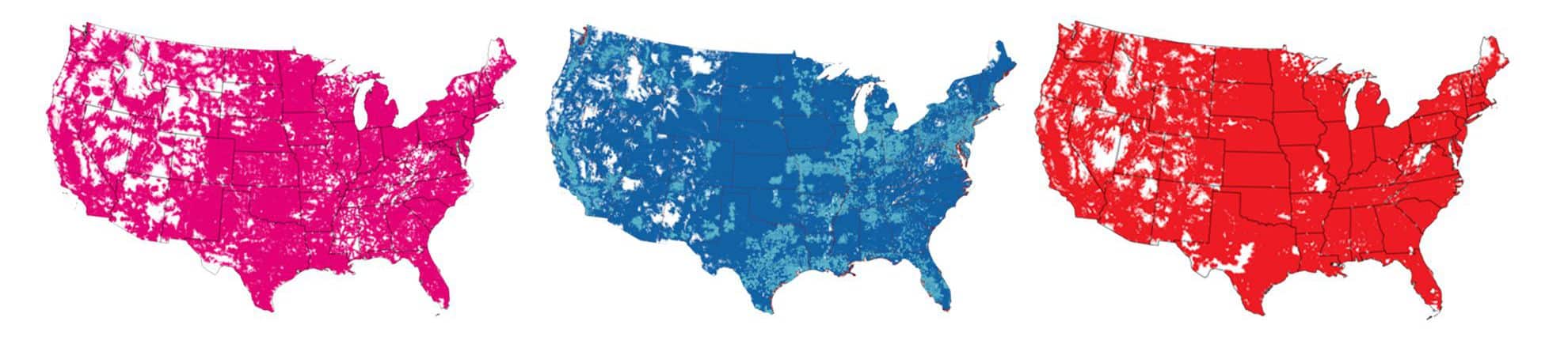
Multi-carrier access is not a guarantee of perfect coverage everywhere. Cellular networks still have dead zones, building penetration limitations, congestion risks, and rural coverage gaps. But multi-carrier support can help ensure reliable coverage and resilience compared with relying on a single carrier in every service area.
Cross-Enterprise Calling
What is cross enterprise calling in PoC?
Users on the HORIZON Push-to-Talk over Cellular (PoC) platform can make nationwide individual (one-to-one) and group (one-to-many) calls within their own enterprise environment. The cross-enterprise group call feature extends this core capability so that groups from different companies or organizations that also subscribe to HORIZON PoC services can directly participate in a shared group call session. Cross enterprise enables organizations to collaborate without merging their entire internal radio systems.
Key Features
Unified Communication Across Organizational Boundaries – Radio systems are traditionally siloed by company. Cross-enterprise group calls allow teams from different companies (contractors, vendors, partners) to make group calls without switching devices or services.
Faster Incident Response and Coordination – Seamless interoperability in multi-vendor or multi-agency scenarios reduces delays in decision making, problem solving, and real-time collaboration.
Scalability and Coverage Without Extra Infrastructure – Because HORIZON uses cellular and Wi-Fi networks rather than site-based repeaters there’s no need to build or manage gateways or separate networks to enable cross-enterprise group communications.
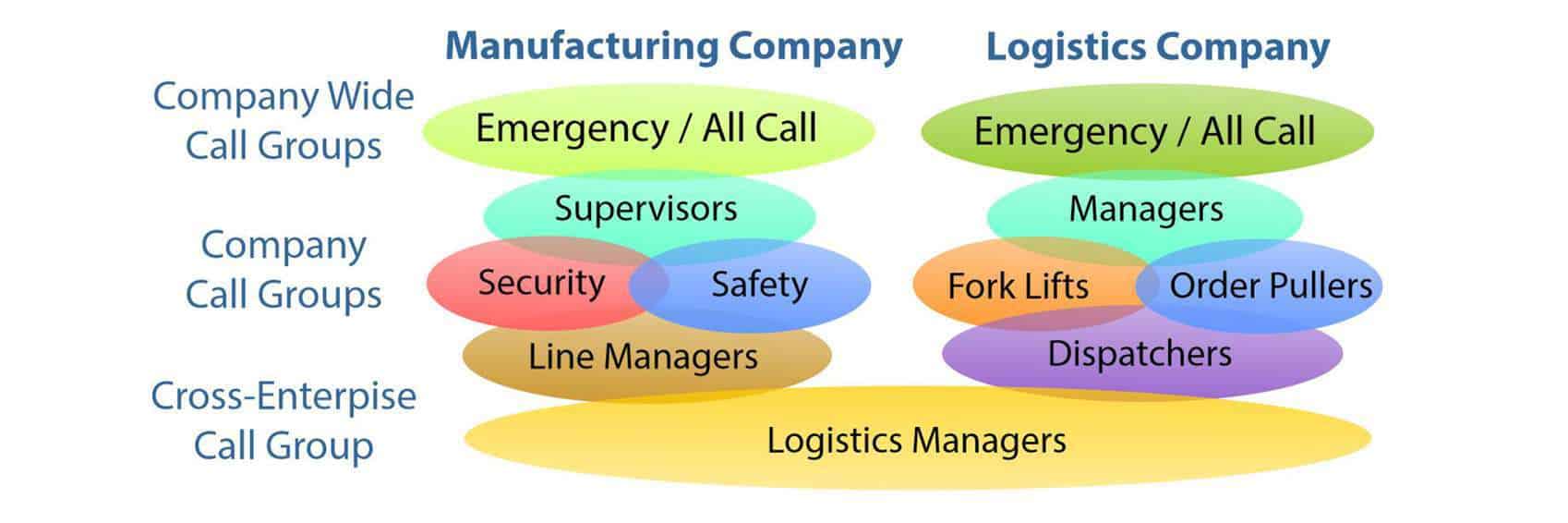
This diagram shows the different group calls set up at a manufacturing company and a logistics company. Each company has their own internal company call groups, and they share a cross-enterprise call group for the logistics managers of both companies to coordinate their supply chain and shipping logistics.
Why is cross enterprise calling useful?
Cross enterprise calling is useful when multiple organizations share responsibility for the same site, event, route, or customer outcome. Traditional radio systems can make this difficult because each organization may use different frequencies, equipment, licenses, or system owners. PoC can simplify interoperability by creating permission-based talk groups across enterprise boundaries.
Common use cases include:
- Security company to client facility management
- School district to transportation contractor
- Event operator to private security provider
- Hospital security to parking or shuttle provider
- Construction general contractor to subcontractor supervisors
- Logistics company to warehouse or distribution partners
- Hotel or resort security to third-party valet or transportation teams
PoC for the Large Enterprise
Large companies and organizations often face communication challenges that go beyond simple push-to-talk coverage. Hundreds and even thousands of users, multiple facilities, regional operations, and diverse departments require centralized administration and the ability to manage communications consistently across the organization. Modern PoC platforms provide access to the PoC System Operations Management application that provides complete control over the PoC system deployment, administration, and ongoing management.
For large organizations, PoC can serve as a unified communications platform that connects locations, fleets, field personnel, and management teams while reducing the complexity associated with maintaining multiple independent radio systems.
Key System Operations Management capabilities include:
- Centralized user and device management
- Enterprise-wide talk group administration
- Geographic and departmental call group segmentation
- Remote radio programming and over-the-air updates
- Detailed usage, activity, and traffic reporting
- Multiple encryption levels and security controls
- Cross-location communications without additional infrastructure
- Rapid onboarding of new users and locations
- Private branding and customized deployment options
PoC Dispatching and Fleet Management
What is PoC dispatching?
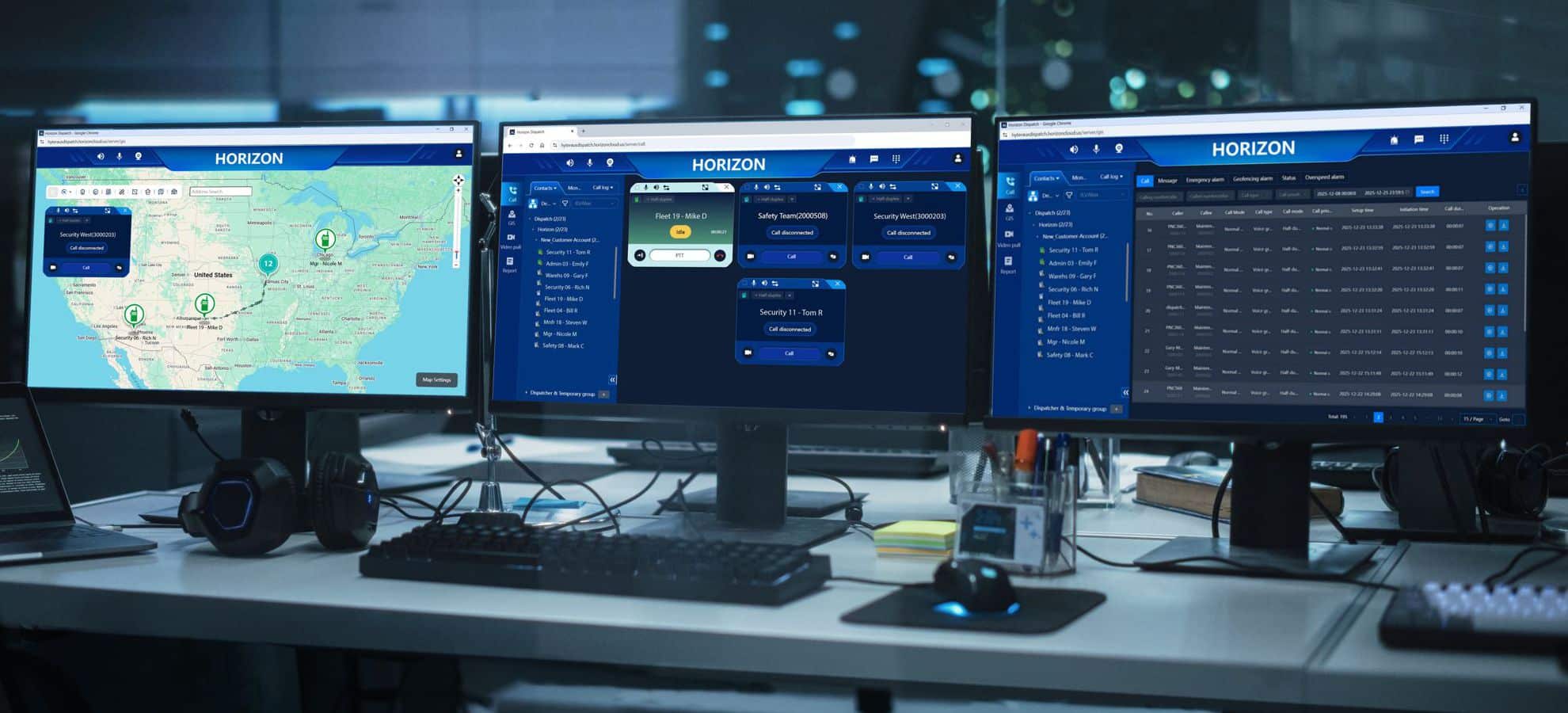
Push-to-Talk over Cellular dispatching is a web-based or software-based control interface that lets dispatchers communicate with PoC users, monitor locations, coordinate fleets, manage incidents, and create dynamic call groups. Dispatching turns PoC from a simple group calling tool into an operational command platform.
What can a PoC dispatch application do?
A professional PoC dispatch application transforms your network into a centralized command center by supporting:
- Voice & Multimedia Communications: Instant group calling, private individual calling, text messaging, image/video sharing, and dynamic call group creation.
- Fleet Management & GPS Tracking: Real-time GPS location tracking, historical route tracking (breadcrumbs), overspeed alerts, and geographic virtual boundaries (geofencing).
- Security & System Logging: Instant emergency alerts, visual alarm notifications, comprehensive call/message/emergency event logs, and remote over-the-air device stunning or reviving.
- Enterprise Operations: Multi-monitor dispatch workflows designed for high-volume command environments.
How does GPS tracking help fleet management?
GPS tracking helps dispatchers see where vehicles and workers are in real time. This improves routing, response time, job assignment, incident coordination, and accountability. Breadcrumb trails and timestamps can help managers review routes, confirm job site presence, investigate service delays, and document field activity.
What is geofencing in PoC dispatch?
Geofencing allows a dispatcher or administrator to define a virtual boundary on a map. The system can then generate alerts when a radio or vehicle enters or leaves the area. This is useful for route compliance, restricted zones, school bus operations, security patrol territories, construction sites, logistics yards, and service areas.
Why is dispatching important for large organizations?
Large organizations need more than simple group calls. They need call group management, multiple locations, role-based communication, emergency handling, fleet visibility, remote users, reporting, and centralized coordination. PoC dispatching provides the operational layer that helps supervisors and dispatchers manage communication at scale.
Connecting PoC to Existing Radio Systems
Can PoC connect to existing DMR or analog radio systems?
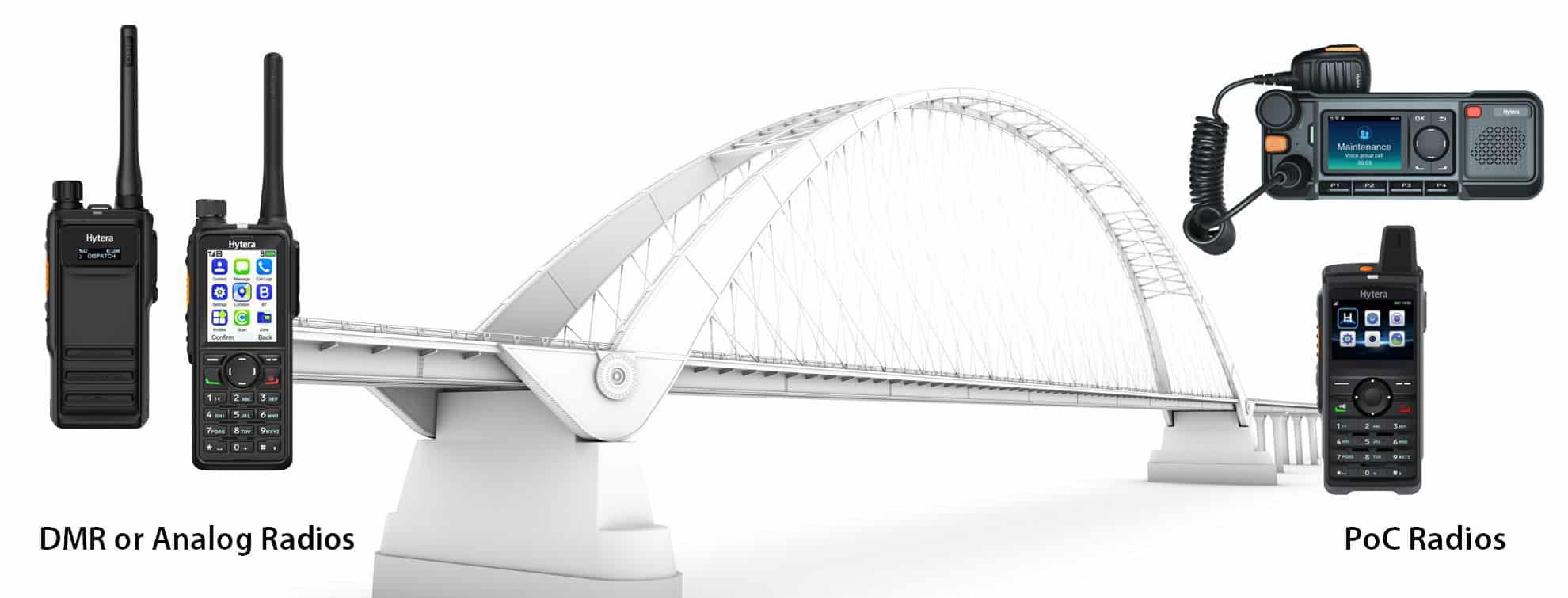
Yes. PoC can be connected to existing DMR, P25, and analog radio systems through a RoIP gateway or bridge. This allows organizations to add wide-area PoC communications while preserving investments in current two-way radio systems. Organizations with existing radio networks looking to expand coverage with PoC now have an “and both” strategy rather than an “either or” strategy. DMR is still valuable for mission-critical local coverage, dedicated spectrum, and infrastructure-controlled environments. PoC is valuable for wide-area coverage, rapid deployment, dispatch visibility, multimedia, and mobile workforce communication. A bridge lets the two systems work together where it makes operational sense.
What is a PoC bridge?
A PoC bridge is a gateway between broadband PoC devices and narrowband radio systems. It can connect PoC radios to analog radios, DMR Tier II systems, DMR Tier III trunking systems, or other supported radio systems. Hytera BRIDGE is designed to provide a simple and cost-effective PoC-to-DMR or PoC-to-analog interconnect.
When should a business use a PoC bridge?
A PoC bridge is useful when a business has a reliable local radio system but needs to extend communications to remote locations, vehicles, or mobile teams. For example:
- A school has DMR radios on campus but needs to communicate with buses.
- A security company uses DMR at a venue but needs wide-area communication with mobile patrols.
- A warehouse uses analog or DMR radios inside the facility but wants supervisors or fleet vehicles on PoC.
- A company wants to migrate gradually from traditional radio to broadband PoC.
- A district or enterprise wants one device strategy that can reach both local radio users and nationwide PoC users.
Conclusion
Push-to-Talk over Cellular gives organizations a modern way to communicate instantly across facilities, routes, campuses, cities, regions, and nationwide service areas. It preserves the speed and simplicity of traditional two-way radio while adding the benefits of broadband networks, cloud services, dispatching, GPS tracking, emergency alerts, multimedia messaging, and enterprise-level management.
For businesses that need rapid deployment, wide-area coverage, low infrastructure cost, and flexible group communications, PoC is one of the strongest alternatives to building or expanding a traditional radio network. For organizations that already own DMR or analog systems, PoC does not have to replace existing investments. With a PoC bridge, broadband devices can connect to current radio systems and extend communications to mobile teams, remote sites, and fleet vehicles.
Push-to-Talk over Cellular is not intended to replace every traditional radio system. Instead, organizations should evaluate where broadband communications provide greater flexibility and where conventional DMR systems continue to deliver the greatest value. For many businesses, the most effective solution combines both technologies through a hybrid communication strategy.
Frequently Asked Questions
PoC stands for Push-to-Talk over Cellular. It refers to push-to-talk communications over LTE, 5G, 4G, and Wi-Fi networks.
PoC works like a two-way radio from the user’s perspective because users press a button to talk. The difference is that PoC uses broadband cellular and Wi-Fi networks instead of UHF or VHF radio frequencies and local repeaters.
No. PoC uses cellular and Wi-Fi networks, so customers do not need FCC radio frequency licenses for traditional UHF or VHF radio channels.
Yes. Many PoC devices support Wi-Fi and can use a facility Wi-Fi network when cellular coverage is not needed or when users operate inside a building or campus.
Many PoC devices can use both Wi-Fi and cellular networks. Some devices can move between available Wi-Fi and cellular connections depending on configuration and coverage.
A multi-carrier SIM can support access to multiple mobile carrier networks. This helps PoC devices maintain service when one carrier has weak or unavailable coverage in a specific area.
Yes. A RoIP gateway or PoC bridge can connect PoC radios to DMR or analog radio systems, allowing organizations to extend existing radio communications to wide-area PoC users.
A mobile PoC radio such as the MNC360 is designed for vehicle use, loud audio, tactile controls, GPS tracking, and dispatch integration. Fleets may also use handheld PoC radios or smart devices depending on the role.
PoC reliability depends on cellular coverage, Wi-Fi quality, device quality, and the PoC platform’s server redundancy. Businesses should evaluate coverage, platform uptime, server redundancy, dispatch needs, and device durability before deployment.
The biggest advantage is wide-area communication without traditional radio infrastructure. PoC gives organizations instant group calling, dispatching, and GPS visibility across broad coverage areas using existing LTE, 5G, and Wi-Fi networks.
Unlike traditional radios that are limited by radio coverage, PoC radios can communicate wherever compatible 4G/LTE, 5G, or Wi-Fi connectivity is available. Coverage may extend across cities, states, or nationwide depending on network availability.
No. PoC requires an IP connection through either a cellular data network or Wi-Fi. If neither connection is available, users cannot communicate until connectivity is restored.
It depends on the application. Some organizations replace traditional radio systems entirely, while others use PoC alongside DMR or analog radios. Hybrid deployments are common because they combine local radio coverage with nationwide broadband communications.
Yes. Many PoC platforms support international communications where compatible cellular service and platform licensing are available. Availability depends on the provider, roaming agreements, and local network support.
Security depends on the PoC platform. Enterprise systems commonly support user authentication, encrypted communications, role-based permissions, secure cloud infrastructure, and centralized administration to help protect voice and data traffic.
A PoC radio is primarily designed for fast, reliable voice communications with dedicated controls. A PoC smart device combines Push-to-Talk with Android applications, barcode scanning, cameras, and other business tools for users who need both communications and mobile computing.
Yes. Enterprise PoC platforms are designed to support organizations with hundreds or thousands of users across multiple locations through centralized user management, talk groups, and dispatch applications.
Deployment can often be completed in days rather than months because organizations typically do not need to install repeaters, towers, antennas, or licensed radio infrastructure. The timeline depends on the number of devices, user configuration, and deployment planning.