
How to Choose the Best PoC Radios

The best PoC radio is a professional-grade Push-to-Talk over Cellular device that is durable, easy to use, loud enough for the work environment, secure, supported by a reliable PoC service, and matched to the user’s job role. Before buying PoC radios, compare audio quality, ruggedness, IP and MIL-STD ratings, battery life, warranty coverage, GPS features, encryption, dispatch compatibility, call group limits, device options, and total subscription cost. The best test is a live demonstration using the radios in the actual areas where employees will use them.
What is a PoC Radio?
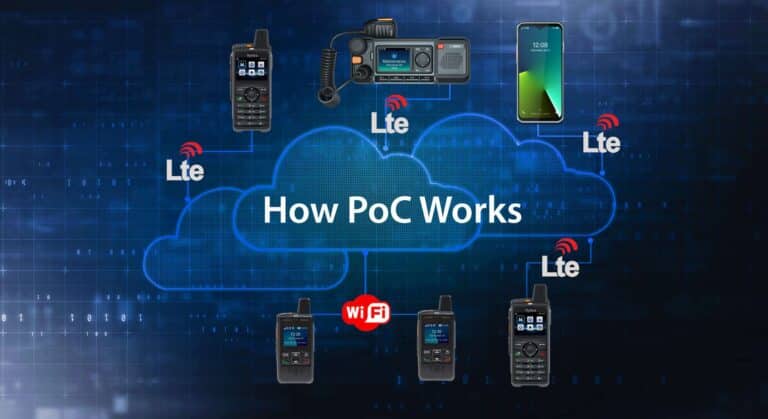
A PoC radio is a Push-to-Talk over Cellular device that uses 4G/LTE and 5G cellular networks and Wi-Fi networks to connect users to a cloud-based PoC service. From the user’s perspective, a PoC radio works like a traditional two-way radio: press the PTT button, talk, release, and listen.
The difference is the network. Traditional two-way radios use UHF or VHF radio frequencies and may require repeaters, antennas, and FCC frequency licenses. PoC radios use broadband networks and a cloud-based PoC server for individual calls, group calls, dispatch communication, GPS location tracking, emergency alerts, text, images, and other supported features.
Choosing the right PoC radio is not just about finding a device that can make a push-to-talk call. It is about choosing the right communication tool for the way your employees actually work.
Professional PoC Radios vs. Consumer-Grade Push-to-Talk Devices
Not all push-to-talk devices are built for the same purpose.
Consumer-grade push-to-talk radios and recreational devices may be fine for casual use, outdoor hobbies, family communication, or light-duty environments. But business users need radios that can survive daily use over years, loud environments, dropped devices, harsh weather, constant charging cycles, and employees who depend on communication to do their jobs safely and efficiently.
Professional PoC radios are designed for commercial and enterprise use. They typically offer stronger audio, more durable housings, better batteries, physical PTT controls, GPS support, security features, professional accessories, fleet or dispatch integration, and longer warranty protection. Professional PoC radios are also built on more advanced and resilient cloud servers for businesses that need reliable and consistent PoC services.
When comparing PoC vendors, the buyer should look beyond simple coverage claims or monthly pricing. The real question is whether the devices, service, warranty, accessories, dispatch tools, and dealer support are strong enough for your operating environment.
Start With the Physical Quality of the Radio
PoC radios can have visibly different levels of quality and durability. Some devices feel rugged, well-built, and purpose-designed for business communication. Others feel more like consumer electronics with push-to-talk software added.
When evaluating a PoC radio, inspect the physical device carefully:
Look at:
- Housing quality
- Button feel
- Speaker loudness
- Microphone placement
- Screen visibility
- Clip and lanyard attachment points
- Charging contacts
- Accessory ports
- Battery attachment
- Drop protection
- Dust and water resistance
- Ease of use with gloves
- Usability while walking, driving, or responding to an incident
The best PoC radio should feel like a professional communication device, not a fragile gadget.
Test the Audio Quality in the Actual Work Environment
Audio quality is one of the most important buying criteria for PoC radios. It can also vary dramatically between devices.
A radio that sounds clear in a quiet office may perform poorly in a school hallway, hotel lobby, parking lot, warehouse, manufacturing floor, construction site, security vehicle, casino, hospital, or loading dock.
The only reliable way to compare audio quality is to test the radios where they will actually be used.
During testing, evaluate:
- Speaker loudness
- Voice clarity
- Microphone pickup
- Background noise reduction
- Audio quality in vehicles
- Audio quality outdoors
- Audio quality in hallways, stairwells, and mechanical rooms
- Audio quality near machinery, crowds, traffic, HVAC systems, or carts
- Whether users can understand short, urgent messages the first time
For many business environments, loud and clear audio is more important than advanced app features. If a user cannot hear or understand a call, the radio will not support reliable operations.
Look for AI-Based Noise Cancellation
The best professional PoC radios include AI-based noise cancellation or AI-based noise suppression. This technology helps separate the user’s voice from background noise in real time.
In practical terms, AI-based noise cancellation is designed to recognize human speech and reduce competing sounds such as machinery, wind, traffic, crowds, carts, HVAC equipment, or other workplace noise. This can make push-to-talk communication easier to understand in loud environments.
When comparing PoC radios, do not just ask whether the device has noise cancellation. Test it. Have users make calls in noisy areas and compare how clearly the receiving radio hears the message.
Check the Warranty Period
Warranty coverage is a strong signal of product quality and manufacturer confidence.
High-quality professional PoC devices commonly include two-year warranty protection. Lower-cost and consumer-grade push-to-talk devices provide shorter warranty periods; some as short as six months. A short warranty can shift more replacement and repair risk to the customer, especially when radios are used heavily every day.
Look for radios that have at least a two-year standard warranty.
Before buying PoC radios, ask:
- What is the standard warranty period?
- Does the warranty cover manufacturing defects?
- What parts are excluded?
- Is the battery covered separately?
- What is the repair or replacement process?
- Is accidental damage coverage available?
- Who handles warranty service?
- What happens when the warranty expires?
The radio purchase price is only one part of the cost. A cheaper device with a short warranty can become expensive if radios fail, batteries degrade quickly, or the replacement process disrupts operations.
Choose Rugged Radios for Long Service Life
Business PoC radios should be rugged enough for daily work and should last for several years of consistent use. Employees drop devices, carry them in vehicles, clip them to belts, place them on counters, expose them to dust, use them in rain, and carry them through active job sites.
Check for ruggedness IP dust and water intrusion ratings and MIL-STD ratings before buying.
Important ratings include:
- IP67: Protection against dust and temporary water immersion
- IP68: Higher water ingress protection, depending on the manufacturer’s test conditions. Look for several hours of submersion at 1 meter depth.
- MIL-STD-810: Testing against environmental stress such as shock, vibration, temperature, humidity, and impact conditions
These ratings matter because PoC radios are mobile devices used by mobile workers. A radio may be carried by housekeeping, maintenance, security, drivers, field service, warehouse teams, school staff, or industrial workers for an entire shift.
A rugged device can reduce downtime, replacement cost, and user frustration.
Make Sure the Battery Lasts a Full Shift
Battery life is another critical buying factor. A PoC radio should support a full shift of operation on a single charge.
For many organizations, that means at least 8 to 12 hours. For longer shifts, double shifts, transportation routes, security patrols, and field service roles, longer battery life is better.
Professional PoC radios may use lithium-ion or lithium-polymer batteries that support 24 hours, 40 hours, or more of operation depending on the model, battery size, usage pattern, and network conditions.
When comparing battery life, ask:
- What is the rated operating time?
- What is the battery capacity?
- Is the rating based on normal push-to-talk use or standby time?
- How long does charging take?
- Are spare batteries available?
- Are multi-unit chargers available?
- Can batteries be replaced by the user?
Do not evaluate battery life only from the spec sheet. Test the radios across a real workday whenever possible.
Choose the Right Device for Each User Role
A strong PoC vendor should offer a range of devices, not just one or two radio options. Different users need different communication tools.
A frontline worker may need a compact radio that is lightweight, easy to carry, and simple to operate. A security supervisor may need a full-featured radio with a display, camera, keypad, emergency button, and accessory options. A manager may need a smart device that combines PTT with Android business apps. A driver may need a mounted mobile PoC radio with loud audio and tactile controls.
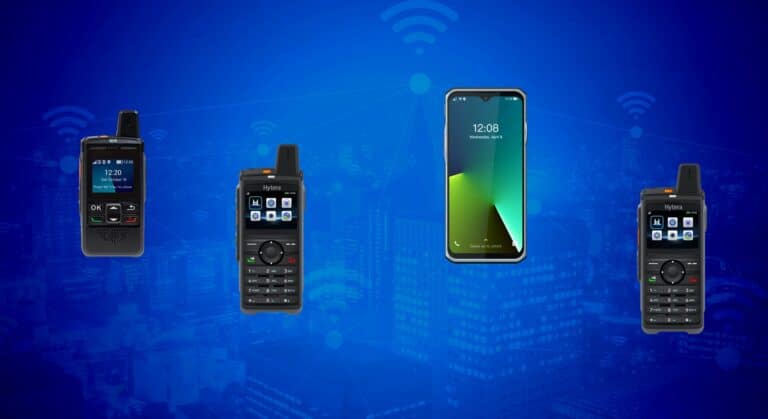
Common PoC device categories include:
Compact PoC Radios
Compact PoC radios are good for frontline users who need fast voice communication without extra complexity. They are useful for hospitality, schools, retail, facility management, housekeeping, maintenance, and general operations.
Full-Featured PoC Radios
Full-featured PoC radios are better for supervisors, security teams, mobile patrols, and users who need more controls, larger screens, keypads, cameras, or additional emergency and messaging features.
PoC Smart Devices
PoC smart devices combine push-to-talk communication with Android applications. They are useful for managers, healthcare teams, warehouse operations, inspections, barcode scanning, inventory workflows, field service, and users who need both communication and mobile computing.
PoC Mobile Radios
PoC Mobile radios are installed in vehicles. They are designed for fleets, school buses, shuttle vehicles, delivery routes, security patrol vehicles, service trucks, and transportation operations. They provide a more practical driver communication experience than handheld phones or consumer devices.
The key is to choose the device that fits the user, not the device that happens to be available from the vendor.
Confirm Encryption and Privacy Features
Business communication may include sensitive information about facilities, students, patients, guests, employees, customers, routes, incidents, security, or operations. PoC radios should support secure and encrypted communication features appropriate for the organization.
Ask whether the PoC platform and devices support:
- Digital encryption
- User authentication
- Private individual calls
- Permission-based talk groups
- Role-based access
- Remote stun or disable for lost radios
- Administrative control over users and devices
- Secure dispatch access
- Privacy controls for GPS tracking and location visibility
Encryption and access control are especially important for schools, healthcare, security, transportation, logistics, enterprise operations, and any organization with safety-sensitive communication.
Compare What is Included in the Price
PoC pricing can be difficult to compare because vendors may bundle features differently. A low monthly price may not include the features your organization actually needs.
Before selecting a PoC radio and service plan, confirm whether these features are included or cost extra:
- GPS location tracking
- Unlimited call groups
- Individual calling
- Group calling
- Emergency calling
- Text messaging
- Image sharing
- Video calling or video sharing
- Dispatch access
- Call recording
- Reports
- Geofencing
- User management
- Device management
- SIM card and data service
- Multi-carrier SIM access
- Support
- Replacement protection
- Accessories
GPS and unlimited call groups are especially important to verify. Some vendors may include them in the base service, while others may charge extra or restrict them by plan.
The right comparison is not “radio price vs. radio price.” The right comparison is total system value.
Evaluate the Dispatch Application
Many organizations eventually need more than basic group calling. Dispatch and fleet tracking software can turn a PoC deployment into a more complete operating platform.
A dispatch application may support:
- Group calling
- Individual calling
- GPS location tracking
- Fleet visibility
- Emergency alerts
- Dynamic groups
- Messaging
- Call logs
- Location history
- Geofencing
- Multi-user dispatch workflows
When evaluating dispatch, look closely at how the application is delivered.
A flexible, web-browser-based dispatch application can be easier to access from authorized computers without installing dedicated client software. Installed client software may limit where dispatch can be used, create IT overhead, and make licenses more expensive or less flexible.
Ask the vendor:
- Is dispatch browser-based or software-based?
- Does it require installation on a specific computer?
- How many dispatcher licenses and software dongles are included?
- How much do additional dispatcher licenses cost?
- Can managers access dispatch from different authorized locations?
- Does it support GPS tracking?
- Does it support text, images, video, or emergency alerts?
- Can dispatchers create dynamic call groups?
- Can the system scale for multiple sites or departments?
Dispatch licensing can become a major cost factor, so it should be evaluated before purchase.
Do Not Choose Based Only on “Nationwide Coverage”
Many PoC vendors promote nationwide coverage. That can be accurate when the device has access to 4G/LTE and 5G cellular networks and Wi-Fi service, but coverage claims should be interpreted carefully.
PoC radios do not create their own nationwide radio network. They depend on cellular and Wi-Fi connectivity. If cellular service is weak or unavailable, performance can be affected. If a building has poor Wi-Fi and weak cellular signal, users may experience coverage gaps.
Before choosing a PoC radio, test:
- Cellular coverage inside the facility
- Cellular coverage outdoors
- Cellular coverage in vehicles
- Wi-Fi coverage in operational areas
- Device performance in stairwells, basements, elevators, and back rooms
- Performance across routes, campuses, parking lots, and remote job sites
- Multi-carrier SIM behavior, if supported
A professional PoC dealer should be willing to help verify coverage and device performance before deployment.
Get a System Demonstration Before You Buy
The best way to choose PoC radios is to get a live system demonstration.
A demonstration should include the actual radios, PoC service, dispatch application, GPS features, accessories, and call groups that your organization is considering. It should not be limited to a tabletop presentation in a conference room.
During the demo, test the radios in the places where employees will actually use them.
For example:
- Hotel hallways, guest floors, back-of-house areas, parking areas, and maintenance rooms
- School buildings, athletic fields, bus loading zones, offices, and parking lots
- Warehouses, docks, aisles, freezer areas, offices, and yards
- Manufacturing floors, break rooms, shipping areas, and outdoor work zones
- Security posts, patrol routes, vehicles, stairwells, and perimeter areas
- Construction sites, trailers, laydown yards, and active work areas
A real-world demo will reveal issues that a brochure cannot.
Use a PoC Radio Evaluation Checklist
Before choosing a PoC radio, use this checklist:
- Does the radio feel professional and durable?
- Is the audio loud and clear in the actual work environment?
- Does it include AI-based noise cancellation or noise suppression?
- Does it support LTE, 5G, 4G, and Wi-Fi as needed?
- Is it rugged enough for the job?
- Does it have IP67, IP68, or MIL-STD protection?
- Will the battery last a full shift?
- Are spare batteries and multi-unit chargers available?
- Does the device include GPS?
- Are unlimited call groups included or extra?
- Does the device support encryption?
- Does the system support emergency alerts?
- Is dispatch browser-based and flexible?
- Are dispatch licenses included or expensive add-ons?
- Is the warranty two years or shorter?
- Is there a local dealer or support partner?
- Does the vendor offer multiple device types?
- Can the system scale as your organization grows?
- Has the radio been tested in the actual deployment areas?
Conclusion
Choosing the best PoC radio requires more than comparing coverage claims or monthly service prices. The right radio should be professional-grade, rugged, loud, secure, easy to use, and supported by a reliable PoC platform.
Businesses should compare build quality, audio performance, AI noise cancellation, battery life, warranty coverage, IP and MIL-STD ratings, GPS features, encryption, included call groups, dispatch access, device variety, and total system cost.
The best PoC radio is the one that works reliably for your users in your real operating environment. That is why every organization should request a system demonstration and test the radios in the actual areas where they will be deployed before making a final decision.
Frequently Asked Questions
The best PoC radio for business is a professional-grade device with reliable LTE and Wi-Fi connectivity, loud audio, rugged construction, long battery life, encryption, GPS support, a strong warranty, and compatibility with a reliable PoC service and dispatch platform.
Look for build quality, audio clarity, AI-based noise cancellation, IP67 or IP68 protection, MIL-STD durability, full-shift battery life, GPS tracking, encryption, emergency features, warranty coverage, accessories, dispatch compatibility, and real-world coverage performance.
No. PoC radios can vary significantly in durability, audio quality, battery life, warranty coverage, security features, device options, and dispatch support. Some are consumer-style devices, while others are professional radios built for business use.
Consumer-grade devices are generally designed for lighter-duty or recreational use. Professional PoC radios are designed for commercial environments and typically provide stronger audio, rugged construction, physical PTT controls, longer battery life, GPS, emergency features, accessories, dispatch integration, and stronger warranty protection.
Audio quality is critical because many PoC radios are used in loud environments such as schools, warehouses, hotels, manufacturing plants, construction sites, parking lots, and vehicles. Users need to hear and understand calls the first time, especially during urgent situations.
AI-based noise cancellation helps identify the human voice and separate it from background noise in real time. This improves voice clarity in loud environments with machinery, traffic, crowds, wind, carts, HVAC equipment, or other workplace noise.
A business PoC radio should be rugged enough for the work environment. Look for IP67, IP68, or MIL-STD ratings for protection against dust, water, shock, vibration, and impact.
A PoC radio should support a full shift of operation on a single charge. Many professional PoC radios provide 24 hours or more, and some compact devices can support up to 40 hours or more depending on the model, battery, and usage conditions.
Warranty length matters because it indicates the manufacturer’s confidence in the device and affects the customer’s long-term replacement risk. A two-year warranty provides stronger protection than a short warranty period such as six months.
Yes. Business PoC radios should support encryption and access controls for private and secure communications, especially in schools, healthcare, security, transportation, logistics, and enterprise environments.
It depends on the vendor and service plan. Some PoC services include GPS and unlimited call groups, while others charge extra or restrict features by plan. Buyers should confirm what is included before comparing prices.
Yes. A vendor with multiple device options can match the radio to the user’s role. Frontline workers may need compact radios, supervisors may need full-featured radios, managers may need smart devices, and fleet drivers may need mobile radios.
A web-based dispatch application can provide more flexible access than installed client software. It can reduce IT complexity, support authorized access from different locations, and make dispatch easier to scale across teams or facilities.
Test the radios in the actual areas where they will be used. Evaluate audio quality, coverage, battery life, ruggedness, GPS tracking, dispatch access, emergency features, and ease of use during normal work activities.
Not usually. The cheapest radio may have lower audio quality, shorter battery life, weaker durability, fewer features, shorter warranty protection, or limited support. The best PoC radio is the one that provides the best long-term value and reliability for the organization.