
Push to Talk over Cellular for Large Companies

How Large Companies Can Manage a PoC System
Push-to-Talk over Cellular for large enterprises helps organizations manage instant communication across multiple locations, departments, teams, and many users from a centralized PoC platform. Using a PoC System Operations Management application, large companies have complete control over the management of their PoC radio system to organize users by location or role, create and update call groups, remotely program radios, apply user templates, review system activity, manage privacy settings, and disable lost or stolen devices. This makes PoC a scalable communication solution for companies that need consistent push-to-talk service across many facilities, vehicles, and operating teams.
The Enterprise Deployment Use Case
The HORIZON Push-to-Talk over Cellular platform is the only PoC platform that provides access to the System Operations Management application that gives large companies complete control over the management of their PoC radio system.
The HORIZON System Operations Management provides streamlined communications for large school districts, companies with several locations, security companies covering many client locations, logistics companies and warehouses, construction companies, and healthcare systems with multiple facilities.
Using the HORIZON System Operations Management application, a variety of communication parameters can be tailored to specific organizational requirements.
- Define geographic segmentation for multiple locations
- Remotely manage and update call groups across the system
- Program radios, and add or remove users
- Generate network traffic reports
- Enable privacy encryption levels
- Create a privately branded system
- Simplify deployments with comprehensive online training
Organize Calling Across Many Groups and Locations
Large and complex organizations with many users spread out across several locations can use the HORIZON System Operations Management application to configure and control their own radio system for call groups and locations. This can be done remotely by an authorized HORIZON administrator with an internet connection.
For example, a company has multiple locations and hundreds of employees who will require radio communications. The locations include corporate offices, a manufacturing plant, and a warehouse/logistics facility. Each location has several call groups that segment the communications by job type.
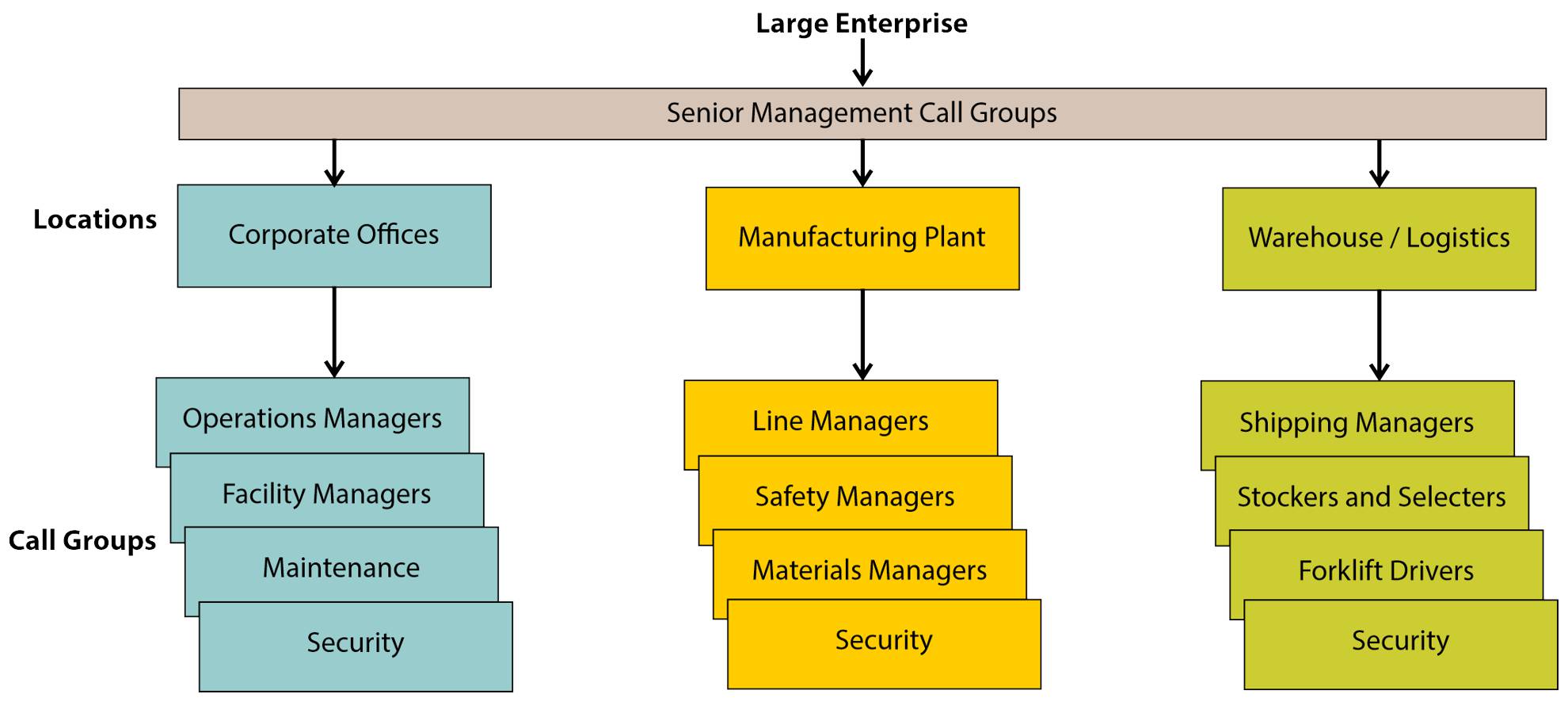
The challenge with typical radio systems is that all the users and groups from all locations are listed on each radio, so users have scroll through lists of dozens of call groups and hundreds of individual users to make a call. Or they may have to organize and regularly update this long list into a more manageable list of favorites.
With HORIZON System Operations Management, the users at each location can be organized into segmented “silos” that include only the users and groups at each location. This simplifies communications for users that typically only need to communicate with others at their own site. Senior managers can program call groups that overlap multiple locations when they may need to speak to managers or security staff at multiple locations on one call.
The benefit to radio users is a streamlined user interface for calling that lists only the contacts and call groups on the radios pertinent to them based on employee structure, job type, or location.
Program Radios and Add or Removing Users
Another challenge when managing large numbers of radio users is adding and removing users, and reprogramming or repurposing radios. A company would typically have to work with a radio dealer or radio system provider to order each radio and specify how it will be programmed, and then wait for the radio to be configured and shipped (or delivered). This can be a challenge, especially with many locations separated by long distances.
With HORIZON System Operations Management, the company can maintain an inventory of extra radios and then quickly program them for specific users and distribute the radios to the new users as needed. When an employee leaves the company, the radio can be easily reprogrammed for the next user.
Radio configuration is simplified using configuration templates throughout the organization or with specific groups. Multiple radios can also be simultaneously configured using a batch import process. This not only saves time but also ensures a uniform user experience across the organization.
Generate Network Traffic Reports
Gain valuable insights into system usage via comprehensive reporting found in the HORIZON System Operations Management application. Monitor call traffic with detailed usage reports for overall system calling, types of calls (individual and group calls), calls per location, and groups and individual user calls. These insights enable system optimization based on actual system data; for example, identifying high usage areas that may require adding a new call group.
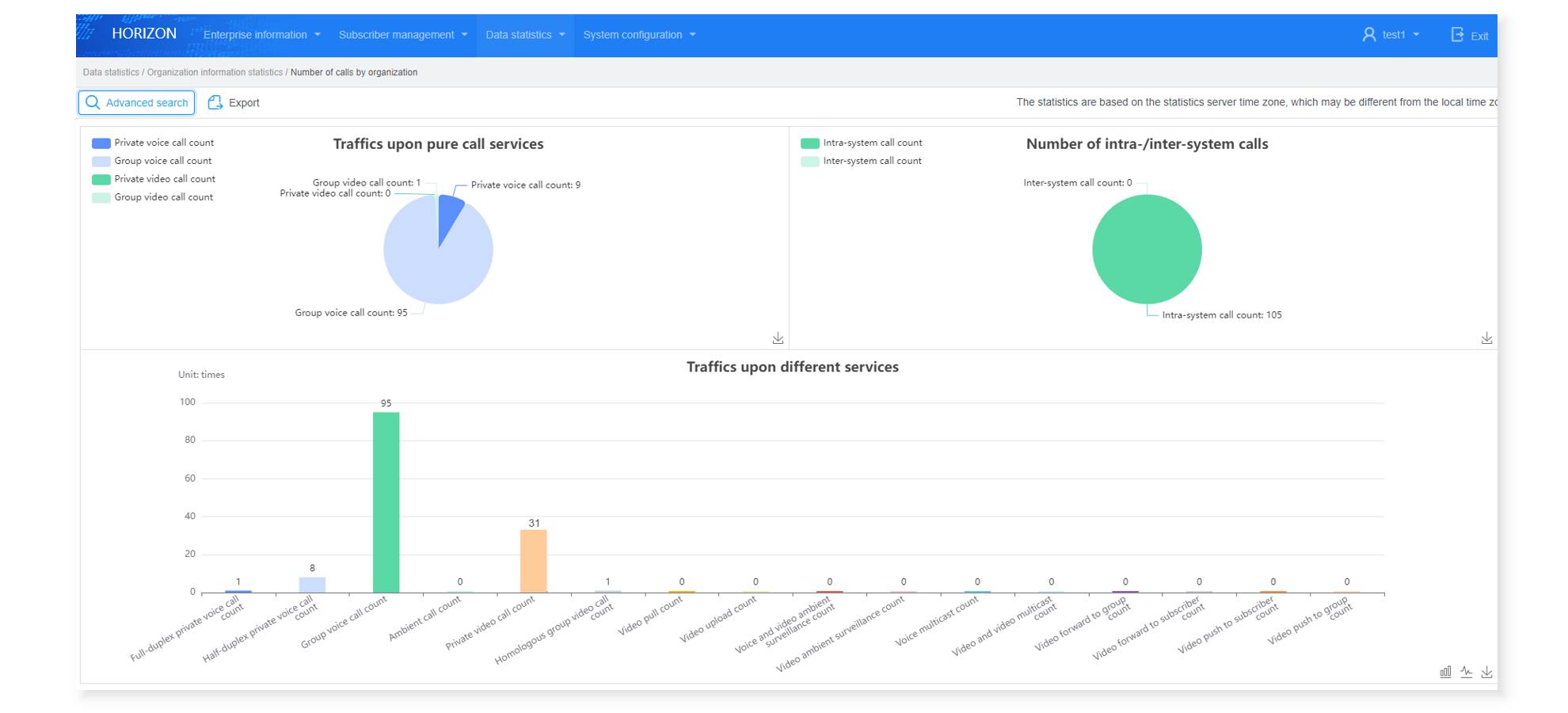
HORIZON System Operations Management Traffic Report Screen
Privacy and Encryption
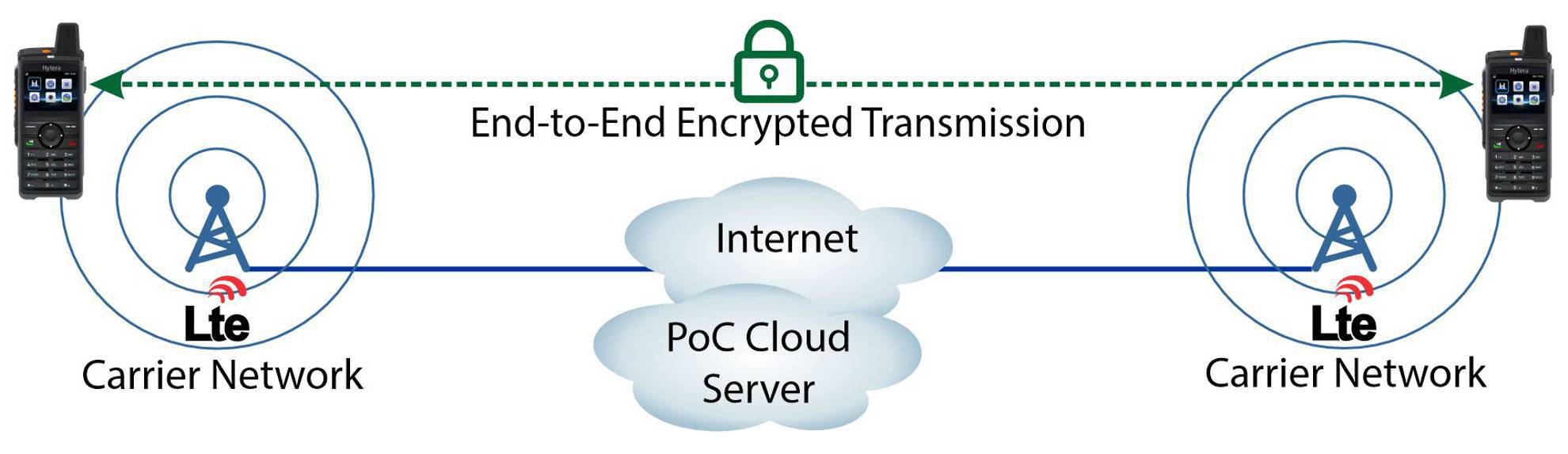
The HORIZON PoC platform supports end-to-end digital encryption for secure and private communications. Digital encryption provides the maximum level of security and privacy for individual calls (one to one) and group calls (one to many). HORIZON supports the ARC4 (Alleged RC4) and AES (Advanced Encryption Standard) encryption algorithms to encrypt digital voice and data transmitted over the radio network. AES or ARC4 encryption can be enabled on PoC radios using the HORIZON System Operations Management application.
PoC radios on the HORIZON platform provide additional security with the ability of a dispatcher to stun (disable) a radio that has been lost or stolen to prevent unauthorized users from listening to calls on the network. In addition, using the GPS built into the PoC devices, HORIZON Dispatch can locate missing radios.
Custom Branding
Elevate the company brand with customizable branding options. Deploy the HORIZON system with company logos on device screens and dispatch software, for a cohesive brand experience for all employees.
System Training
Hytera US Inc offers comprehensive online training provided without charge for management teams to easily learn to control and operate the HORIZON communications system.
Summary
HORIZON is a Push-to-Talk over Cellular (PoC) solution that offers flexible communication across diverse user groups and locations, supported by high-capacity cloud servers with redundant failover for uninterrupted service. The system allows seamless structuring for multiple accounts or within a single organization, providing complete operational control. HORIZON’s System Operations Management enables customization of communication parameters, such as geographic segmentation, call group management, radio programming, and privacy encryption.
User management is enhanced with easy reprogramming of radios, and security is prioritized through end-to-end digital encryption and the ability to disable lost or stolen radios. Additionally, companies can personalize the system with custom branding, and Hytera US Inc provides free online training for seamless implementation and operation.
Frequently Asked Questions
Push-to-Talk over Cellular for the large enterprise is a wide-area communication solution that allows organizations with many users, locations, departments, vehicles, and job roles to manage push-to-talk communications through a cloud-based PoC platform. It supports centralized administration, user management, call group control, dispatch access, reporting, and secure communication across multiple sites.
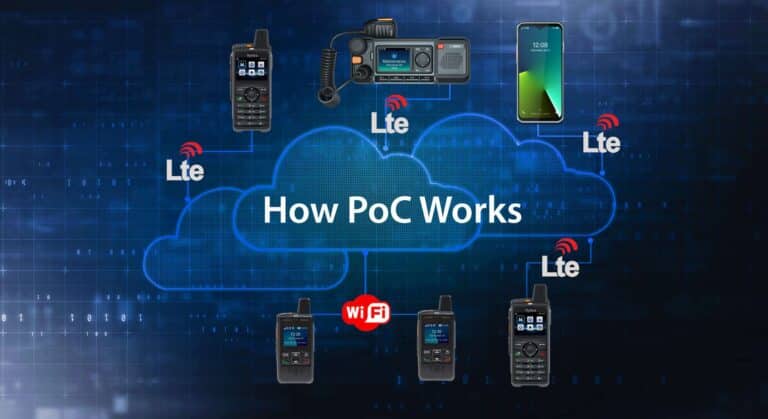
Large companies use Push-to-Talk over Cellular because it gives distributed teams instant communication without requiring every location to build or maintain its own radio infrastructure. PoC can connect users across offices, warehouses, schools, healthcare facilities, construction sites, fleets, and remote operations through LTE, 5G, 4G, and Wi-Fi networks.
An enterprise PoC system can segment users by location, department, role, or business unit. This allows each site to see the users and talk groups that are relevant to them, while senior managers, administrators, or dispatchers can be given access to multiple locations when broader communication is needed.
Call group segmentation organizes users into specific talk groups based on location, job function, department, or operational need. For example, a large company may have separate call groups for corporate offices, manufacturing, warehouse operations, logistics, security, maintenance, and management. This keeps communication more efficient and prevents users from scrolling through irrelevant groups or contacts.
Yes. A large enterprise PoC platform can allow authorized administrators to add users, remove users, program radios, update call groups, apply configuration templates, and repurpose devices remotely. This is especially useful for organizations with many locations or employees who are frequently added, transferred, or replaced.
Remote radio programming helps large organizations deploy and update devices faster. Instead of manually programming each radio one at a time or shipping devices back for configuration, administrators can use templates, batch updates, and remote management tools to assign radios to users, roles, locations, or call groups.
HORIZON System Operations Management is an administrative application for configuring and managing enterprise PoC deployments. It can be used to manage users, call groups, locations, radio programming, reporting, privacy settings, and other system parameters across a large organization.
PoC dispatch supports large enterprises by giving dispatchers a centralized interface for group calling, individual calling, location tracking, fleet visibility, and operational coordination. Dispatch access can also be segmented by location, so a warehouse dispatcher, corporate dispatcher, or regional dispatcher can be given the correct level of system access.
Yes. Enterprise PoC systems can provide usage and traffic reports that help administrators review system activity. Reports may show call traffic, individual and group call activity, usage by location, and high-traffic groups. These insights can help organizations optimize talk group structure and communication workflows.
Enterprise PoC platforms can support digital encryption, user authentication, device permissions, and administrative controls. Security features may include encrypted individual and group calls, managed access to the network, and the ability to disable lost or stolen radios.
Yes. Some PoC platforms allow an authorized dispatcher or administrator to remotely stun or disable a lost or stolen radio. This helps prevent unauthorized users from listening to calls or accessing the PoC system.
Yes. Some enterprise PoC platforms support private branding options, including company logos on device screens, dispatch software, or other user-facing system elements. This can create a more consistent communication experience across the organization.
Enterprise PoC management is useful for school districts, security companies, healthcare systems, logistics companies, warehouse networks, construction companies, manufacturing groups, transportation fleets, hospitality groups, and any organization with many users across multiple departments or locations.
A basic PoC deployment may focus on simple individual and group calling for a smaller team. Enterprise PoC adds centralized administration, segmented locations, advanced call group control, dispatch access, reporting, encryption, remote programming, user templates, and scalable system management for larger organizations.
Yes. Enterprise PoC can simplify large-scale communication by organizing users into relevant locations and groups, limiting unnecessary contact lists, allowing remote changes, and giving administrators control over how users, radios, dispatchers, and groups are structured across the organization.