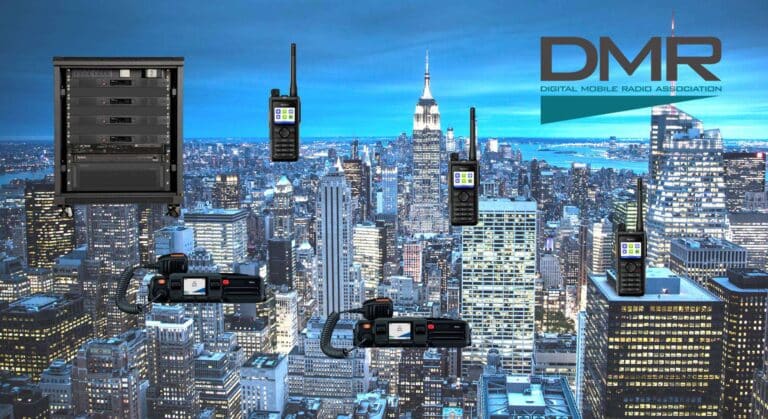

Comparing DMR Radio Systems: Which System Is Right for You?

The DMR standard supports a variety of scalable repeater, network, and trunking systems. Select the system mode that aligns with your operational baseline:
- Radio-to-Radio: Tailored for small, localized teams requiring basic short-range links.
- DMR Tier II Conventional: Engineered to expand single-site coverage via high-power repeaters.
- IP Site Connect: Links geographically distant Tier II repeater sites over an IP network.
- Extended Pseudo Trunk (XPT): Pools multiple repeaters to maximize group calling traffic capacity.
- DMR Tier III Trunking: Delivers mission-critical, managed wide-area enterprise control and dynamic routing.</p>
DMR System Selection Overview
Selecting a commercial wireless infrastructure is a fundamental system-design decision, not a simple hardware purchase. The ideal network mode depends on matching specific operational variables such as total active user counts, physical workplace layouts, peak transmission frequency, talk group structures, and specialized software integrations.
Modern digital mobile radio technology provides five distinct system classifications. Rather than one system being objectively superior, each classification is engineered to solve a specific business problem: from overcoming physical building obstructions and bridging separate geographic locations to relieving peak-hour channel congestion.
Start With Coverage and Capacity
Before evaluating hardware lines, system planners must answer two fundamental questions: Where do your teams need to communicate, and how many concurrent conversations must occur during peak operational windows?
Understanding the difference between these two parameters prevents critical network missteps:
- Coverage (The Geography): The physical, geographic footprint where your wireless signals must penetrate (e.g., a multi-story building, an expansive shipyard, or a regional utility route).
- Capacity (The Traffic): Your system's structural ability to handle multiple users, data streams, and group calls simultaneously without returning busy signals.
The Design Intersection: A wireless network can possess massive geographic range but extremely limited throughput capacity. For example, a basic IP Site Connect network links distant facilities to widen coverage, but it does not expand individual channel capacity. Conversely, a Hytera XPT network targets capacity, pooling on-site repeaters to clear traffic bottlenecks without requiring a full Tier III upgrade.
Deconstructing DMR System Architectures
1. Radio-to-Radio
The most direct system layout, allowing handheld units to communicate directly with one another without centralized infrastructure.
- Target Environment: Small, local teams operating within a tightly confined line-of-sight perimeter.
- Primary Advantage: Simple deployment with zero infrastructure costs; serves as an easy entry point to digital clarity.
- Core Limitation: Range is highly vulnerable to structural concrete shielding, geographic terrain, and physical obstructions. Lacks an expansion path for dispatch or advanced data tools.
2. DMR Tier II Conventional Repeater Systems
The primary standard for mainstream professional business radio systems requiring centralized site reinforcement.
- Target Environment: Large single-site facilities, expansive school campuses, manufacturing plants, and distribution yards.
- Primary Advantage: Elevates transceivers to clear physical dead zones, while leveraging two-slot TDMA efficiency to double channel capacity.
- Core Limitation: Confines specific talk groups to static, assigned frequencies, which can cause calling bottlenecks during peak shifts.
3. IP Site Connect
An infrastructure upgrade that links distinct conventional repeaters across separate facilities using an IP network backbone.
- Target Environment: Distributed multi-site operations, such as regional warehouse networks or separate campus locations.
- Primary Advantage: Connects geographically isolated teams into a single, unified network using familiar device workflows.
- Core Limitation: Focuses exclusively on expanding geographic range rather than adding localized channel capacity.
4. Hytera Extended Pseudo Trunk (XPT)
An advanced capacity expansion layer that introduces automated pseudo-trunking behaviors to standard Tier II networks.
- Target Environment: High-activity single or multi-site enterprises experiencing frequent channel blockages.
- Primary Advantage: Pools up to 8 repeaters per site to generate 16 dynamic channels, automatically shifting users to open paths without a dedicated control channel cost.
- Core Limitation: Requires specialized, compatible Hytera repeaters and high-tier terminal units to manage pseudo-trunking logic.
5. DMR Tier III Trunking Systems
The elite, fully trunked classification of the global standard, managed by a centralized control channel.
- Target Environment: Regional public utilities, mass transportation grids, heavy industrial complexes, and commercial SMR networks.
- Primary Advantage: Maximizes spectrum efficiency via dynamic controller routing, while adding comprehensive access security, call priorities, and full network redundancy.
- Core Limitation: Requires significant upfront system engineering, dedicated control frequency licensing, and specialized network hardware infrastructure.
Comparing DMR Radio Systems – Which System Is Right For You?
Each DMR system type solves a different communication problem. Some organizations only need simple radio-to-radio communication, while others need repeater-based coverage, multi-site connectivity, expanded group calling capacity, or fully trunked system management. The table below provides a quick comparison of common DMR radio system options so you can identify which architecture best matches your coverage, capacity, feature, and growth requirements.
| System Type | Best Fit | Coverage | Capacity | Typical Capabilities |
|---|---|---|---|---|
| Radio-to-Radio Direct Communication | Small teams with simple short-range needs | Limited to radio transmit power, terrain, buildings, and obstructions | Limited compared with repeater or trunked systems | Direct voice communication, simple group use, no repeater infrastructure |
| DMR Tier II Conventional | Businesses needing licensed professional communication and better site coverage | Larger sites when used with repeaters and antenna systems | Two-slot TDMA on a 12.5 kHz channel | Group calls, individual calls, text messaging, GPS, dispatch integration, and repeater-based coverage when supported |
| IP Site Connect | Organizations with multiple facilities or remote sites | Connects multiple Tier II repeater sites over IP networks | Expands coverage, not the basic two-slot capacity of each linked Tier II channel | Multi-site communication, local and wide-area talk groups, familiar DMR operation |
| XPT | Organizations that need more group calling capacity without full Tier III trunking | Single-site or multiple sites connected over IP networks, depending on system design | Expands group calling capacity through pseudo-trunking across multiple repeaters | Dynamic channel use, increased group call capacity, familiar Tier II-based operation |
| DMR Tier III | Large organizations and wide-area networks with many users, talk groups, and sites | Wide-area coverage based on repeater sites, network design, and licensed frequencies | Trunked architecture dynamically assigns resources | High-capacity individual and group calling, dispatching, user management, roaming, priority handling, redundancy, and centralized control |
*This table should be used as a planning shortcut, not a substitute for system design. Coverage, capacity, and available features depend on the exact radios, repeaters, antennas, software, licenses, network architecture, site conditions, and programming.
Decision Framework for Business Buyers
Review these core operational checklist questions with your management team to pinpoint the system architecture that best fits your workflow goals:
Geographic Requirements
- Is direct radio-to-radio coverage completely reliable across your entire property layout?
- Does your workflow require teams at separate physical locations to talk across a single network?
- Do your workers frequently move between locations where automated over-the-air roaming is required?
Traffic & Capacity Demands
- Is your primary operational challenge geographic distance, call channel congestion, or both?
- How many distinct talk groups need to run separate, non-interfering conversations during peak shift changes?
- Does your operation generate heavy data traffic from real-time GPS location tracking or security logging?
Security & System Governance
- Does your management team require centralized oversight to control device registration and verify user access?
- Do security personnel or dispatch supervisors need command-grade priority call override tools during an incident?
- What existing spectrum licenses, repeater assets, and handheld fleets must be factored into your analog-to-digital migration strategy?
What to Confirm with an Authorized Dealer or Systems Integrator
DMR system design should be validated by an authorized Hytera dealer or radio systems integrator. The integrator should evaluate site conditions, licensing, frequencies, antenna locations, indoor and outdoor coverage, user count, talk group plan, device compatibility, dispatch requirements, and future growth.
Confirm the following before moving forward with a system:
- Exact radio models and supported system modes
- Repeater model, licensing, and software requirements
- Coverage testing and site survey needs
- FCC licensing or frequency coordination requirements
- Compatibility with existing analog or DMR equipment
- Dispatching, recording, GPS, and monitoring requirements
- Battery, accessory, and audio accessory requirements
- Training needs for channels, groups, zones, and emergency procedures
A successful DMR deployment starts with the right system design. By working with an authorized dealer or systems integrator, organizations can confirm that the selected radios, repeaters, software, accessories, licensing, and coverage plan are aligned with real operational needs. This helps ensure the system is built for today’s communication requirements while leaving room for future growth, added features, and expanded coverage as your organization evolves.
Frequently Asked Questions
A small team with limited coverage needs may want to use radio-to-radio DMR. If coverage is unreliable or the site is larger, a Tier II repeater system should be evaluated.
Choose Tier II when a single site needs better coverage, better signal quality, organized talk groups, licensed professional communication, and optional dispatch or monitoring features.
Use IP Site Connect when multiple Tier II repeater sites need to communicate over an IP network, such as campuses, facilities, remote buildings, or distributed operations.
Use XPT when a Tier II system needs more group calling capacity and more efficient use of multiple repeaters, but the organization does not need full Tier III trunking.
Use Tier III when the organization requires wide-area trunked communication, dynamic channel allocation, high-capacity calling, centralized control, user management, priority handling, and advanced system resiliency.